
Fungal nail care at home
Thick, discoloured toenails? With the tiptoe routine, you care for a fungal nail at home. Twice a day, you apply peptide drops at the base of the nail, look after the skin around it and protect your feet and shoes. It takes patience: think months, not weeks.
- Applied at the base of the nail, where new nail grows
- Care for the skin around the nail and between your toes
- Three clear steps you can follow at home
- Painless, fragrance-free and colour-free
How the tiptoe routine works
Many people with a fungal nail try tablets from their GP, a medicated nail lacquer from the pharmacy or laser treatment. The tiptoe routine is something you do yourself, at home, with three steps that work together for nail, skin and feet.
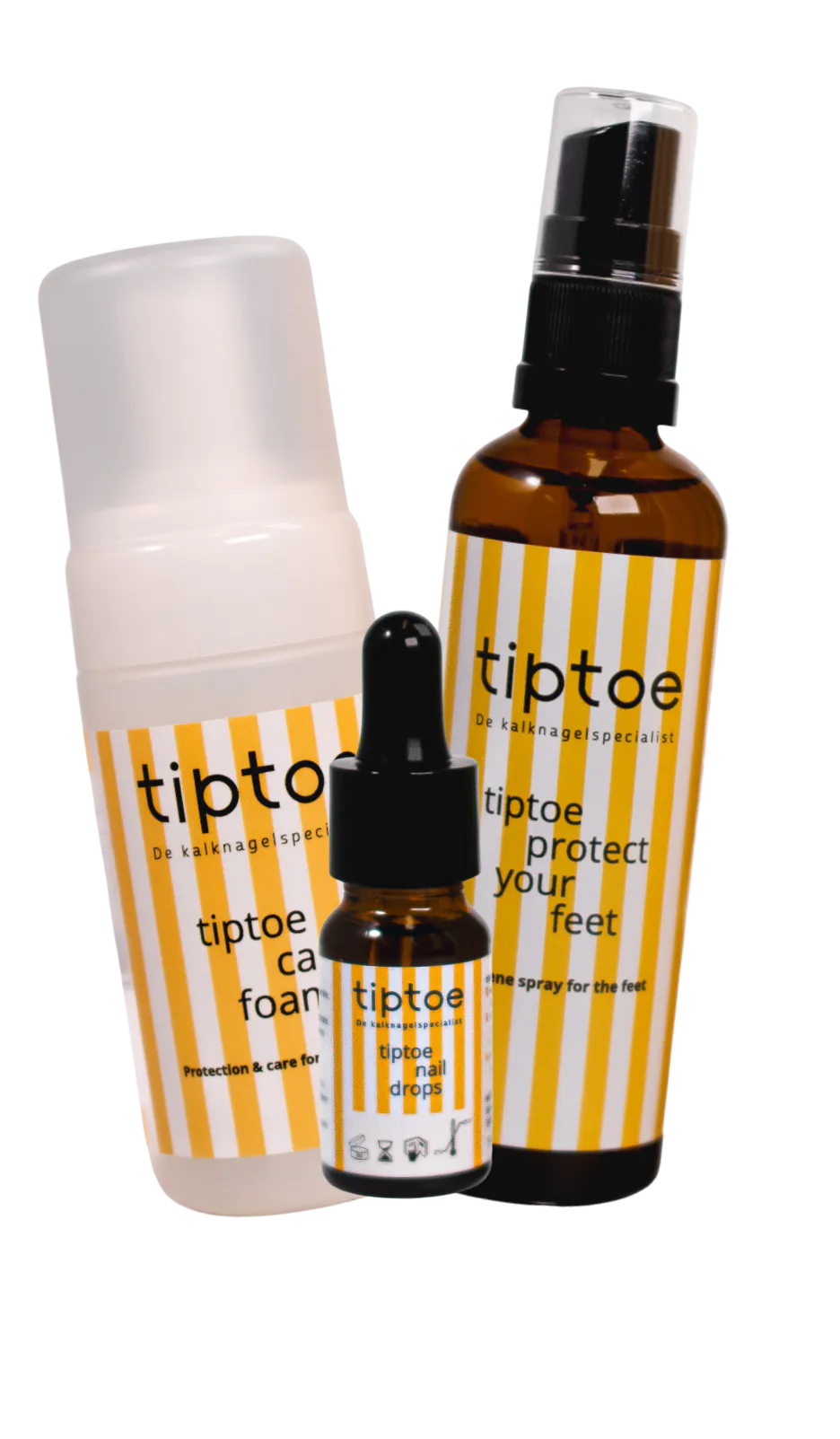
Twice a day, you apply tiptoe naildrops at the base of the nail, where new nail grows. The drops contain a patented peptide. Then you use tiptoe care foam on the skin around the nail and between your toes, and tiptoe protect your feet on your feet and inside your shoes.
Why all three? A fungal nail often comes back because only the nail gets treated, while the skin between the toes and the shoes reinfect it.
- The active step: naildrops at the base of the nail, twice a day
- Fragrance-free and colour-free, also during pregnancy and with medication
- A nail grows about 1 mm every 6 weeks, so you stick with it every day
Fungal nail care with a patented peptide at its core
Our patented peptide came out of scientific research. And we’ve been looking at fungal nails every day since 2018.
Published research
Scientific publications have been written about the peptide in tiptoe naildrops.
Made from amino acids
The peptide is made from amino acids naturally found in the body and is biodegradable.
Patented formula
The peptide is the result of years of study and research by microbiologists. It’s patented, and tiptoe holds the exclusive licence to use it.
Fragrance-free, colour-free
Suitable from age 4, also during pregnancy and with medication. For external use only.
What you need to get started
The tiptoe starter kit has everything for the three steps: naildrops, care foam and protect your feet. You’ll find the current price in the shop. Most people choose the complete routine, with a new bottle of naildrops every month, so they never run out halfway.
- All three steps of the routine in one kit
- Not sure how many nails need it? The nail test helps you choose
What is a fungal nail?
When a fungus grows on or under a nail, it’s called a fungal nail infection (the medical name is onychomycosis). Fungi and bacteria live on everyone’s skin. If they get the chance to get into a nail, a fungal nail can develop. The nail often discolours, thickens and changes shape. It usually starts on a damaged nail, or on a nail or skin that’s often damp.
Think of feet that sweat a lot in closed shoes: for fungi, that’s an ideal place to grow. A fungal nail doesn’t usually cause serious problems, but many people find it unpleasant because of the way it looks. The skin around it can also itch and look red and sore. And there’s often an unpleasant smell, mostly caused by bacteria.
Not sure it’s a fungal nail? Psoriasis or an old injury can look similar. If you’re unsure, if it hurts or spreads, or if you have diabetes, talk to your GP or a podiatrist first.
The benefits of a routine at home
You do it at home, in your own time, without appointments. No tablets and no laser: you apply the drops, care for the skin and protect your feet, a few minutes twice a day. The drops are fragrance-free and colour-free, and you can also use them during pregnancy and with medication.
Be realistic about the timescale, though. The affected nail won’t go back to normal: it grows out. How long that takes depends on how deep the infection goes. What makes the difference is sticking with it every day, until the new nail has grown out.
Why tiptoe
From start to finish
You know what to do at every step: the nail test to begin with, a clear routine for nail, skin and feet, and honest advice on what to expect.
Fungal nail specialists
tiptoe is a Dutch company that focuses on one thing only: fungal nails. We’ve been looking at them every day since 2018.
Years of expertise
We keep building on what we’ve learned about fungal nails, and we share it openly, so you know where you stand.
A complete peptide routine to use at home
The trick isn’t rubbing harder. It’s sticking with it. Three steps that work together: apply, care and protect.
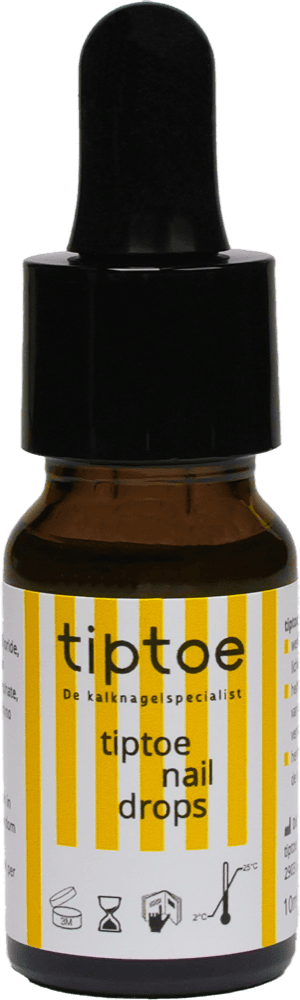
tiptoe naildrops
Twice a dayThe active step. You apply the drops with the patented peptide at the base of the nail, where new nail grows.
View product →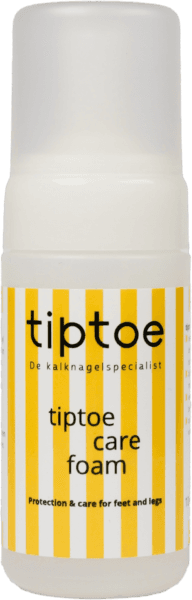
tiptoe care foam
Twice a dayThe skin around the nail and between your toes. Leave it untreated and it can reinfect the nail. Back to square one.
View product →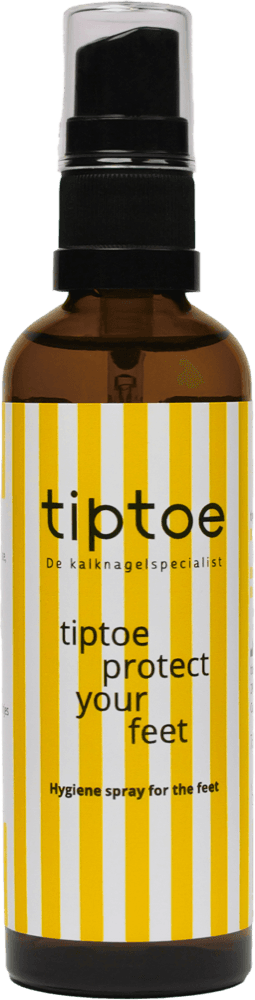
tiptoe protect your feet
Every dayOn your feet and inside your shoes, so you don’t reinfect yourself while the new nail grows out.
View product →
Think months, not weeks. A nail grows about 1 mm every 6 weeks, so sticking with it is what makes the difference. Not sure which steps you need?