The best fungal nail treatment: what works
 Peter Boeters 10 min read

Fungal nails are common, and plenty of people put up with one for years. It usually starts innocently: a slight discolouration, or a nail that’s a bit thicker than the rest. But left alone, the infection can keep spreading and make the nail brittle and crumbly. So what’s the best fungal nail treatment, and how do you stop it coming back?
A fungal nail won’t go away on its own, and it can spread to your other nails. That’s why it pays to start early. There’s no shortage of products and advice, but not everything works equally well. Here you’ll read what actually works, where each option falls short, and how to keep the infection from returning.
How do you know it’s a fungal nail?
Before you start any treatment, make sure it really is a fungal nail. A fungal nail usually turns white, yellow or even brown. Sometimes it gets thicker, goes crumbly or starts to split. That happens because the fungus spreads under and through the nail and breaks down its structure.
Lots of people aren’t sure whether it’s a fungal nail or just a damaged one. A fungal nail no longer grows like a healthy nail and can even lift away from the nail bed. If your nail is changing and getting weaker, it’s worth acting now. The free nail test helps you check, and your GP can confirm it with a nail sample. For the full picture, see our guide to fungal nail symptoms.
Why won’t a fungal nail go away on its own?
Many people think a fungal nail will simply grow out by itself. Unfortunately, it won’t. The fungus sits deep in the nail and keeps spreading until something is done about it. It feeds on keratin, the protein your nails are made of. So the infection stays active, even if you file off the top layer.
A fungal nail is also contagious. Leave it and other nails can become infected too. It can spread through socks and shoes, and in damp places like swimming pools and showers. What matters most is tackling it where it lives: deep in the nail, and in the skin and shoes around it. That’s how you stop it spreading and give clear nail the chance to grow back.
Home remedies for fungal nails: do they work?
Look up how to get rid of a fungal nail and you’ll soon find home remedies like vinegar, baking soda and tea tree oil. But do they work? Many people try vinegar on a fungal nail, because it creates an acidic environment that fungi don’t like. It may make the nail look better for a while, but it doesn’t fully reach the fungus deep in the nail.
Baking soda comes up a lot too. People use it in foot soaks to clean the nail, but it doesn’t get rid of the fungus. Home remedies can sometimes help a little with a very mild infection. A stubborn fungal nail needs a more targeted approach: one that deals with the fungus where it sits and stops it coming back.
The best fungal nail treatment: what actually works
The best treatment is one that reaches the infection where it sits, fits how far along your nail is, and that you can keep up for months. The fungus often sits deep in the nail and close to its base, which is why surface fixes like filing or washing with vinegar aren’t enough.
Here’s an honest overview of the main options in the UK and Ireland, based on what the NHS describes. None of them is quick, and none is right for everyone.
| Option | Where you get it | Often used for | Keep in mind |
|---|---|---|---|
| Medicated nail lacquer (such as amorolfine) | Pharmacy, over the counter | Mild infections | Painted on daily or weekly for 6 to 12 months; not for under-18s or during pregnancy or breastfeeding |
| Tablets (terbinafine, itraconazole) | Your GP | Severe or spreading infections | Up to 6 months, liver blood tests, possible side effects |
| Nail removal | Your GP or a specialist | Badly infected nails | Done under local anaesthetic; the nail takes a long time to grow back |
| Laser treatment | Private clinics | People who want to avoid tablets | Several paid sessions; results vary |
Whichever you choose, improvement shows slowly, because the nail has to grow out. A toenail grows about 1 mm every 6 weeks, so think months, not weeks. And the nail is only half of it: your skin and your shoes need attention too, or the fungus has a way back in.
Where does tiptoe fit? Not in that table. The tiptoe routine is a daily routine for the nail, the skin and your shoes that you do at home, alongside any advice from your GP or pharmacist. You apply tiptoe naildrops, which contain a patented peptide, twice a day at the base of the nail, where new nail grows. Results vary from person to person and depend on how deep the infection goes.
How to get rid of a fungal nail the right way
Looking for a way to get rid of your fungal nail? Cutting it very short or filing it down won’t do it. Filing can make a thick nail thinner and smoother, which feels better and makes it easier to care for, but it doesn’t remove the fungus. The infection sits deep in the nail and can’t simply be filed away.
Some people even think about pulling the nail out themselves. Please don’t. It doesn’t solve the problem and can cause more damage and pain. Removing a badly infected nail is something a doctor does under local anaesthetic, and only when it’s needed. Otherwise the nail has to grow out naturally. The better approach is to deal with the fungus where it sits, keep the nail short and thin with a clean file, and stop the infection spreading.
Five tips for treating a fungal nail at home
Whatever treatment you choose, a few everyday habits make a real difference. These are the five we give everyone.
1. Pick one routine and stick with it
Whatever you use, use it every day, for months. Switching remedies every few weeks is a common reason people feel nothing works. If you choose tiptoe naildrops, you apply the drops twice a day at the base of the nail, where new nail grows. They contain a patented peptide, and scientific publications have been written about it. It’s easy to fit into your day at home.
2. Stop reinfecting yourself
Reinfection is one of the most common problems with fungal nails. Wear clean socks every day, wash them well, and keep your shoes as clean and dry as you can. You can use tiptoe protect your feet, a spray for your feet and the inside of your shoes, so you don’t reinfect yourself. That way you don’t give the fungus an easy way back.
3. Wear the right shoes
Choose breathable shoes that aren’t too tight. Tight shoes create a warm, damp space, which is exactly what fungi like. Avoid synthetic materials where you can and go for leather or other breathable fabrics. And give each pair a day off to dry out.
4. Keep your feet clean and dry
Good foot care matters when you’re treating a fungal nail. Wash your feet every day with lukewarm water and a mild cleanser, or use tiptoe care foam, which cares for the skin around the nail and between your toes. Dry them carefully, especially between the toes. Keep your nails short, and file thick or brittle nails gently with a clean file you don’t share.
5. Keep moisture out
Moisture is a fungal nail’s best friend. Change into dry socks, especially after sport. Cotton or bamboo socks breathe better than synthetic ones. Don’t share towels or shoes, and wear flip-flops or sliders in damp communal places like swimming pools, gym showers and changing rooms.
How long does fungal nail treatment take?
Treating a fungal nail takes time. A toenail grows about 1 mm every 6 weeks, and the affected part only disappears as the nail grows out. So think months, not weeks. How long it takes depends on how deep the infection goes and how fast your nails grow. Patience and consistency matter more than anything else.
If you choose the tiptoe routine, the tiptoe starter kit is the simplest way to begin, with the nail and the skin covered from day one.
When to see a GP or podiatrist
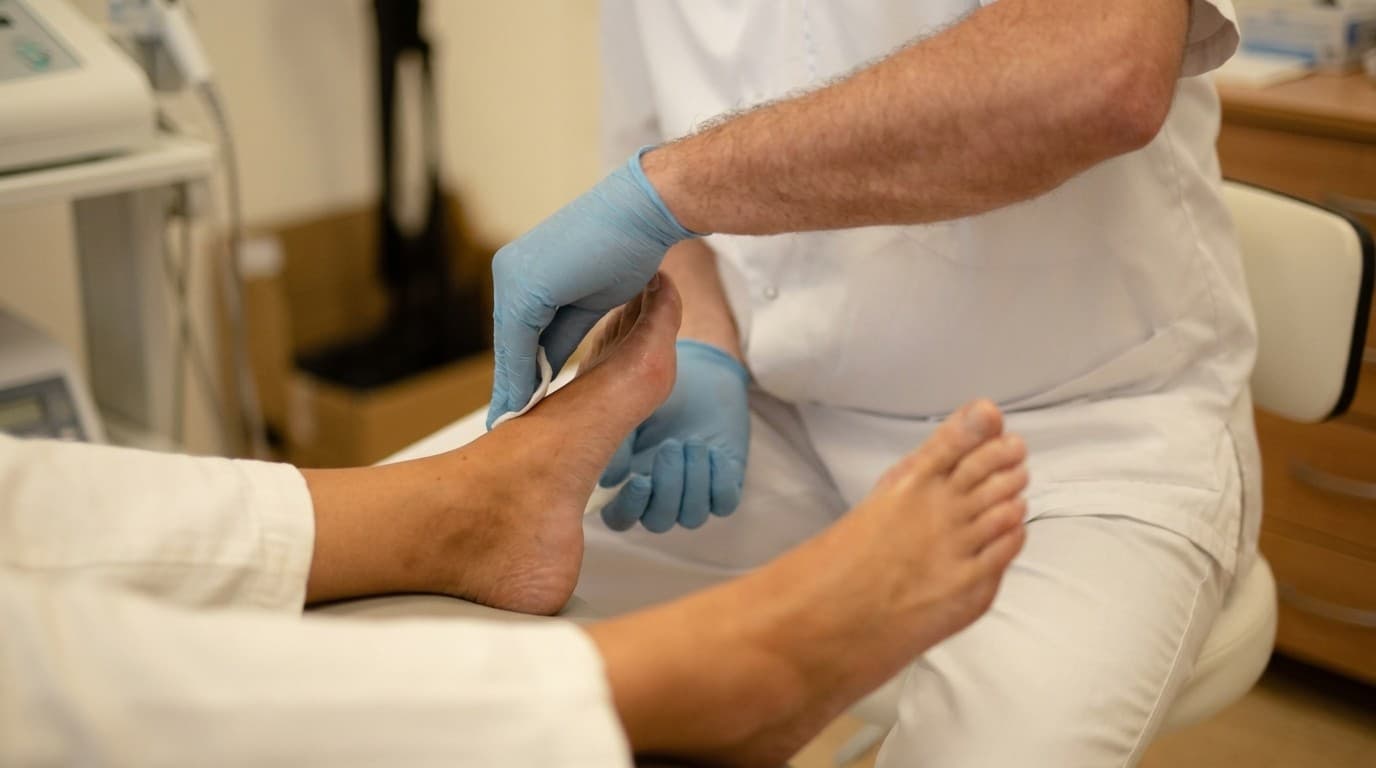
If the infection is severe, spreading or affects many nails, it’s wise to get professional help. The NHS advises seeing a GP if pharmacy treatment hasn’t worked, if the infection has spread, or if you have diabetes or a weakened immune system. A GP can confirm the diagnosis with a nail sample and talk you through tablets. A podiatrist (or chiropodist) can thin a thick nail and advise you on foot care and aftercare.
Age plays a part too. As we get older, circulation to the feet often slows down, nails grow more slowly and fungal nail infections become more common. So if you’re older and a nail is changing, don’t wait to get it looked at.
How to stop fungal nails coming back
Treating a fungal nail is one thing. Stopping it coming back matters just as much. Lots of people find their nails improve for a while, and then the infection returns. That’s because fungal spores can still be in your socks and shoes or on your skin. So hygiene matters.
Keep your feet clean and dry. Change your socks every day and wear shoes that breathe. Clean the inside of your shoes regularly, and don’t walk barefoot in public places like swimming pools and gyms. For the skin and the shoes, the tiptoe routine includes care foam and protect your feet, so you look after your feet and nails and don’t reinfect yourself.
The bottom line
The keys to success are an approach that suits your nail, patience and good nail care. Getting rid of a fungal nail takes a long time, because the nail has to grow out completely before it looks normal again. That’s why it matters to stay consistent and look after your nails along the way.
There are plenty of home remedies, but the best fungal nail treatment is the one that fits how far along your nail is and that you’ll actually keep up, together with care for your skin and shoes. Not sure where you stand? Take the free nail test. If the infection is severe or you have diabetes, talk to your GP first.
Frequently asked questions
What is the best treatment for a fungal nail infection in the UK?
There isn’t one best treatment for everyone. For a mild infection, a pharmacist can recommend a medicated nail lacquer. For a severe or spreading infection, your GP may prescribe tablets after checking a nail sample. Whatever you choose, the nail has to grow out, so think months, not weeks, and look after your skin and shoes too.
Can a fungal nail go away on its own?
No. A fungal nail doesn’t clear up by itself. The fungus sits in the nail and can spread to other nails and to the skin. The earlier you start, the less nail there is to grow out.
Does filing a fungal nail help?
Filing makes a thick nail thinner and more comfortable, and easier to care for. It doesn’t remove the fungus, which sits deep in the nail. Use a file you keep just for the affected nail.
Do home remedies work for fungal nails?
Sometimes a little, rarely completely. Vinegar, baking soda and tea tree oil don’t reach deep enough into the nail to clear an infection. If your nail isn’t improving, speak to a pharmacist.